
Should euthanasia be an option?

This week in my Philosophy and Ethics in Healthcare class we discussed euthanasia. According to the National Cancer Institute, “an easy or painless death, or the intentional ending of the life of a person suffering from an incurable or painful disease at his or her request.“ (1).

We had a guest lecturer from Belfast come in and talk about euthanasia and the philosophy behind it. Euthanasia is a conflicting subject due to the result. Below is a map of the worldwide legalization of euthanasia.
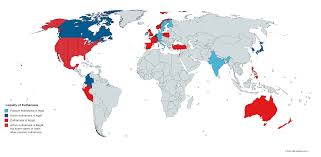
Euthanasia is a very ethically difficult subject because despite everything that is happening, the end result is death.

Throughout the class we discussed every person’s right to life. So I what happens to patient autonomy? Patient autonomy falls second to a their right to life.

Where does that leave us? There really is no correct answer. You have to respect your own morals, but also respect the patient’s wishes. Adding laws into the moral decision makes it that much harder. Many places throughout the world don’t allow it because you, as a medical professional, are ending someone’s life.

In my opinion, euthanasia should never be legal anywhere. Purposely ending the life of someone, even if it is an option medically, should never be a moral option.


“NCI Dictionary of Cancer Terms.” National Cancer Institute, http://www.cancer.gov/publications/dictionaries/cancer-terms/def/euthanasia.

Ethics of Informed Consent

This semester, I am taking a module that teaches us about ethics in health care. As a future health care professional, ethics is a huge part of my job. This week in class we discussed informed consent. Informed consent is interesting to me because there is a large amount of variability when talking about this.

To me, informed consent is one of many important factors when deciding the best treatment for a patient. I agree that the patient deserves to know everything that is going on. Throughout the lecture, we discussed how it is our responsibility, as medical professionals, to know what is in the best interest for the patient. We have a responsibility to tell the patient everything we know so that they can make an informed decision regarding how treatment will proceed.  

Why is that so hard?

The conflict comes when the patient is not in the right state of mind. What happens if that person is unable to make that decision? Then who makes that decision? There is no right or wrong answer. When I heard this, I couldn’t believe it, to think that maybe what the patient wants isn’t always what is best, and we can’t always do what they say.

The key to solving ethical issues like this is to remember to keep the best interest of the patient in mind. This might mean going against the family’s issues which led me to conclude that medicine altogether could become a conflicting career path. So, what do we do?…..